

When it comes to investing in real estate in Fuerteventura, one of the first decisions buyers face is whether to opt for a new construction property or a resale. The two main available options each have their own characteristics, advantages, and disadvantages. This article will explore the key differences between both options. Aspects such as energy efficiency, cost and location will be addressed, as well as other elements that influence the final purchase decision.
Differences Between New Construction and Resale
The differences between new construction and resale properties are notable, covering aspects such as the definition, characteristics, advantages, and disadvantages of each option.
Definition and Characteristics of New Construction Properties
New construction refers to properties that have been recently built and have not had any previous owners. They are delivered to the new owner in optimal conditions, generally after meeting all current building regulations. These properties usually have the following characteristics:
- Optimal conditions: Up-to-date with modern construction and habitability standards.
- Energy efficiency: Incorporation of techniques and materials that guarantee better energy performance.
- Contemporary designs: Well-distributed and aesthetically pleasing spaces, adapted to current needs.
- Personalization: Possibility to choose finishes and design modifications before delivery.

Characteristics of Resale Properties
On the other hand, resale properties are those that have been inhabited and have changed ownership at least once. These properties can offer a rich history and architectural features that vary depending on the construction era. The most notable characteristics include:
- Architectural variety: Possibility to find styles and designs not seen in more recent constructions.
- Location: Often located in established areas with access to services.
- Need for renovations: Many properties require updates or improvements, which can increase the total cost of the purchase.
- Lower price: Generally, the price of these properties is lower compared to new ones, which can be attractive to certain buyers.
Advantages of New Construction Properties
New construction properties offer multiple benefits that can be decisive for buyers. From energy efficiency to modern design, these properties are designed to meet the current needs of homeowners. Below are the main advantages.
Energy efficiency
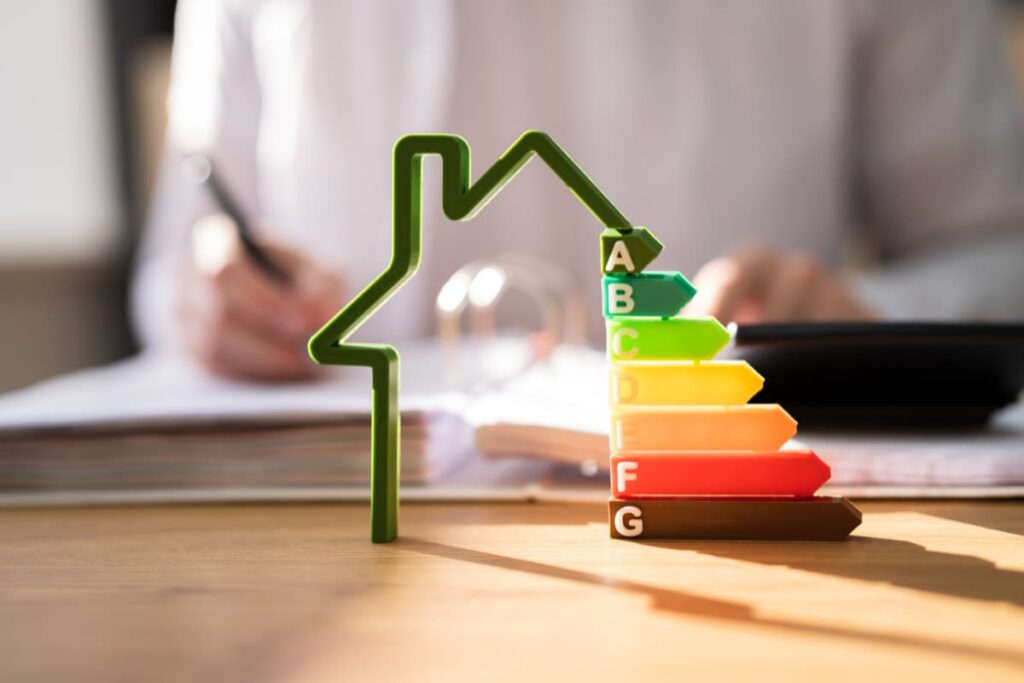
One of the most notable advantages of new construction properties is their high energy efficiency. This aspect translates into lower energy consumption and, therefore, significant savings on electricity bills.
Technical Building Code (CTE)
Recent constructions must comply with the Technical Building Code (CTE), which establishes strict standards in terms of energy efficiency. This regulation ensures that homes are designed and built with aspects such as thermal insulation and the use of renewable energy sources in mind.
Energy efficiency certificate
Additionally, new construction properties obtain an Energy Efficiency Certificate that classifies the property according to its energy performance. This certificate allows future owners to clearly and accurately understand the property’s energy consumption as well as its environmental impact.
Modernity and customization
New construction properties are characterized by their modern designs that respond to current trends. These types of properties are not only aesthetically attractive but can also be adapted to the buyer’s preferences in various aspects.
Customization Options
Buyers of new homes often have the opportunity to customize certain elements of the home, such as the distribution of spaces and finishes. This possibility is a significant advantage, as it allows the buyer to turn the property into a reflection of their style and needs.
Modern and functional design
Additionally, the design of new construction homes is functional and aimed at maximizing the use of space. Open floor plans, natural lighting, and efficient layouts offer a contemporary and comfortable lifestyle.
Reduced need for reforms
When purchasing a new construction property, buyers typically do not face the need for significant renovations. Recent constructions are equipped with modern and efficient facilities, minimizing the initial workload.
Warranties and legal protection
New properties offer a series of warranties that provide peace of mind to homeowners. These warranties are fundamental as they protect buyers from potential construction defects.
Guarantees of the Law on Building Ordinance
The Building Regulation Law includes various warranties for new homeowners. These warranties cover:
- One year for defects in finishes.
- Three years for habitability defects.
- Ten years for structural defects.
This legal framework provides a level of protection that is not always present in resale properties.
Common areas and modern services
New construction properties often have access to common areas and additional services that enrich the quality of life of their residents. These amenities are an integral part of many new construction projects.
Recreational spaces and services
Common amenities include swimming pools, fitness centers, gardens and recreational areas. These amenities not only encourage an active and social lifestyle, but can also increase the value of the property over time.
Disadvantages of new housing
New construction homes, although they have many advantages, also have disadvantages that buyers should consider. Below are some of the most relevant disadvantages associated with this type of property.
Higher price
The cost of acquiring a new home is usually higher compared to second-hand homes. This is critical, as it can limit the purchase options for many potential homeowners.
Comparison of price per square meter
The price per square meter in new homes usually reaches higher figures due to the demand and quality of materials. According to market statistics, this difference can be as much as 17% more, which represents a considerable investment for the buyer.
Impact on the buyer’s budget
This increase in price directly affects the purchasing power of those interested, thus limiting the possibilities of finding a suitable home within their budget. For many, this may mean having to opt for smaller spaces or less desirable locations.
Delivery times
One aspect to take into account is the waiting times associated with the purchase of a new home. These delays can generate inconveniences and additional expenses for the buyer.
Waiting times
When a home is purchased off-plan, delivery can take several months or even years. These waiting times not only lead to uncertainty, but can also cause immediate inconvenience to buyers.
Additional expenses during the waiting period
During the waiting period, buyers may be faced with dual expenses, such as the maintenance of their current home and the need to find a temporary alternative. This can create a significant financial burden, further complicating the acquisition process.
Less diversity in location
New construction tends to be located in developing or less established areas, which may limit location options for those interested in a more established neighborhood.
Urbanization and peripheries
The trend toward building on the periphery of cities means that new housing developments may not be close to essential services, public transportation, and other amenities commonly found in established areas. This can impact residents’ quality of life and their daily commute.
Advantages of second-hand housing
Pre-owned homes offer a number of benefits that appeal to many buyers. These properties can represent a more affordable option, not only in terms of affordability, but also in terms of location and investment potential.
Lower price
One of the main attractions of second-hand homes is their cost, which is usually significantly lower compared to new-build properties. This aspect makes them an affordable alternative for those looking to purchase their home without breaking their budget. The prices per square meter in this segment of the real estate market are usually more competitive, which allows the buyer to obtain a property in a good location without compromising their economy.
Preferred location
Pre-owned housing tends to be located in more established and developed areas. These locations can offer not only a more stable environment, but also a number of advantages that contribute to a better quality of life.
Centrally located and consolidated areas
Most pre-owned properties are located in areas that have been developed for years, and this translates into optimal infrastructure. Many of these homes are located in the heart of the city, allowing residents to enjoy proximity to essential services, commerce and leisure options.
Proximity to services and transportation
The location of pre-owned housing provides easy access to public transportation and other amenities. This may include:
- Nearby subway and bus stations.
- Proximity to schools, hospitals and supermarkets.
- Recreational areas and parks, ideal for family recreation.
This proximity to services not only improves the quality of daily life, but can also be advantageous in terms of property appreciation over time.
Investment opportunity
The second-hand housing market represents an attractive opportunity for those looking to invest. These properties, especially those located in strategic areas, can provide interesting returns.
Profitability due to strategic location
Investing in pre-owned homes can be particularly profitable in high-demand locations. Properties in desirable locations tend to maintain their value or even increase in value as the area develops. Factors such as the emergence of new businesses and improved infrastructure can positively influence appreciation. Investors can benefit from the possibility of renting these properties, ensuring a stable income. This type of investment is often more affordable than new construction properties, which may require higher initial capital.
Disadvantages of second-hand housing
The purchase of a second-hand home can have several disadvantages that are important to consider. These can affect both the condition of the property and the economic investment made when acquiring it. The most relevant disadvantages are detailed below.
Need for reforms
One of the main disadvantages of acquiring a second-hand home is the possibility that it may require renovations. These can range from minor aesthetic improvements to significant remodeling that affects the functionality of the home.
Costs and time invested
Renovations usually represent a considerable expense that must be added to the purchase price of the property. The need for repairs may vary depending on the condition of the property, which means that the initial budget has to be increased to cover these costs. In addition, the time that must be invested in the planning and execution of the renovations can be extensive, which will delay the habitability of the new home.
Stress and delays in moving
The renovation experience can be stressful. Alternating between renovating the property and preparing for the move can create stress and discomfort. The need to coordinate the work of different professionals can also lead to delays, affecting the planned time to move in and settle into the new home.
Age and energy efficiency
Second-hand homes are subject to natural wear and tear and, in many cases, obsolescence of their installations. This can have a considerable impact on the energy efficiency of the property.
Antiquated systems
Water, electrical and HVAC installations in many older properties may not meet current regulations. These outdated systems can not only be inefficient, but also increase maintenance costs. Therefore, the need to upgrade these systems may be an imperative requirement to ensure a livable and comfortable environment.
Compliance with modern regulations
Pre-owned homes may not be aligned with current energy efficiency regulations, forcing new homeowners to make additional investments. Meeting modern standards may require renovation of heating, cooling and insulation systems, generating an expense that may come as a surprise to new owners.
Reduced legal guarantee
Unlike new homes, which are backed by warranties that protect the buyer, second-hand homes generally offer less security from a legal standpoint. This can be a significant disadvantage, since any defects or structural problems that arise after the purchase will have to be assumed by the new owner without any type of support. This can lead to uncertainty regarding the investment made. Legal and fiscal aspects are fundamental when considering the purchase of any home. Both in the acquisition of a new or second hand property, it is essential to know the taxes involved and the financing conditions that may affect the purchase.
Legal and tax aspects
Taxes on purchase
The purchase of a home implies the payment of certain taxes that vary according to the type of property purchased. The most relevant taxes in both cases are detailed below.
VAT on new homes
In the case of new homes, Value Added Tax (VAT) is an aspect to be taken into account. This tax is applied to the sale of new goods and, for most homes, has a tax rate of 10%. However, subsidized housing can benefit from a reduced rate of 4%. This tax is paid at the time of purchase and must be considered in the total budget.
Property transfer tax ITP
For second-hand properties, the Property Transfer Tax (Impuesto sobre Transmisiones Patrimoniales, ITP) must be paid. This tax is a levy that varies according to the autonomous community, with rates that usually range between 6% and 10% of the value of the property. Unlike the VAT, which goes to the State, the ITP goes to each autonomous community and, therefore, it is important to find out about the rates applicable in the region where the property is located.
Financing
The financing process is crucial in the purchase of a home. Banks usually evaluate the risk of the operation and offer mortgage conditions that depend on several factors.
Valuation factors
Financial institutions carry out an appraisal of the property to be acquired. This process determines the market value of the property and, based on this valuation, the percentage that the bank is willing to finance is calculated. Generally, up to 80% of the appraised value is financed, although this may vary depending on the applicant’s profile and payment capacity.
Mortgage conditions
Mortgage terms can vary considerably. Some of the key aspects to consider are:
- Type of interest rate: fixed, variable or mixed.
- Amortization period: usually between 20 and 30 years.
- Fees: which may include opening, maintenance or early cancellation.
- Linkage requirements: insurance or additional products that may be mandatory to access better conditions.
It is essential to compare different offers from different entities to find the option that best suits the buyer’s financial needs.
Factors to consider when deciding whether to buy a new or used building
The choice between a new and a second-hand home involves several factors that can influence the final decision. Considering aspects such as budget, location, readiness for renovations and investment interest is essential for a successful purchase.
Budget and additional expenses
The budget is one of the most critical elements when deciding what type of home to purchase. Not only should the initial price of the property be taken into account, but also the expenses that may arise over time.
Price comparison
New homes tend to have a higher price per square meter than second-hand ones. This can be a determining factor, especially for buyers looking for their first home. It is therefore crucial to compare prices and consider not only the purchase value, but also the long-term revaluation expectations.
Refurbishment and maintenance expenses
Pre-owned homes generally involve additional expenses for renovations and maintenance that vary depending on the condition of the property. These expenses may include improvements in decoration, structural changes, or upgrades necessary to comply with current energy regulations.
Location and services
The location of the property not only affects the quality of life, but also the potential future appreciation of the property. Therefore, it is important to analyze the location in terms of personal preferences and access to services.
Preferences for the area
In general, second-hand housing tends to be in more consolidated areas close to urban centers. These areas often offer a more developed infrastructure, with accessibility to basic services such as stores, schools and health centers, which is a factor to be carefully evaluated.
Accessibility and proximity to services
Proximity to public transportation, parks and other amenities is a vital element to consider in the purchase decision. Location can influence the cost and time of commuting to work or school, thus impacting quality of life.
Preparation for renovations
The willingness to carry out renovations can be a determining factor in the choice between new and second hand. Personal needs and the ability to take on these projects should be carefully analyzed.
Availability of time and resources
Undertaking renovations to a pre-owned home requires not only additional capital, but also time and effort. Buyers should consider whether they have the availability to manage such a process, as well as whether they have the resources to undertake the desired changes without compromising their financial stability.
Investment interest
For those who contemplate the acquisition of a home as an investment, it is essential to evaluate the ability to monetize the purchase through renting or the revaluation of the property in the future.
Payback period
Pre-owned properties, located in high-demand areas, can offer a relatively quick return on investment. These properties tend to attract tenants easily, which is a plus for investors looking for immediate returns.
Tenant demand
Tenant demand can vary significantly depending on location and real estate market conditions. Properties in optimal and well-connected situations will tend to be in higher demand, which translates into better investment potential.
Buying a new or second-hand home?
When considering the purchase of a property in Fuerteventura, both new and pre-owned properties offer unique advantages that should be evaluated based on your personal needs and preferences. If you are looking for energy efficiency, lower maintenance needs and extended warranties, a new build property may be the ideal choice. On the other hand, if you prefer the unique feature of a property with history, potential for customization through renovations and possibly a lower initial cost, a pre-owned home may be a better fit. Remember to consider aspects such as location, initial and future costs, and your long term plans to make the best choice in Fuerteventura. The final decision should balance all these factors to find the home that best suits your expectations and lifestyle.